
Matte Black Car Wrap: Complete Guide to Cost, Care & Installation
Matte Black Car Wrap: Complete Guide to Cost, Care & Installation
Updated September 2026. This edition carries the 2026 price ladder by vehicle size, three photos of satin and matte black vehicles from our own gallery, the matte-specific ceramic coating that now goes on every full matte or satin wrap we install, and a FAQ rewritten around the questions matte owners actually bring back to the counter.
The number first. A full matte black vinyl wrap sits inside our $2,500 to $6,000 full color change range: compact cars $2,500 to $3,500, sedans and coupes $2,800 to $4,200, SUVs and crossovers $3,500 to $5,500, trucks and vans $3,800 to $6,000, exotics from $5,000. Plan on three to five days in the shop. Every full vinyl wrap leaves with a complimentary ceramic top coat, and on matte and satin film that coat is a matte-specific formula, because a standard gloss ceramic would add shine you did not pay for. One care note before you commit: true matte shows fingerprints, water spots and wash mistakes more readily than satin, so read the care section before you choose between them.
Get your bracket on the wrap cost calculator, read the vinyl wrap service page, or call (305) 244-8908 and describe the car.
Why Matte Black Keeps Getting Requested
In our shop, matte black is consistently the single most requested wrap color, and the reasons hold up.
It reads as factory-premium. Several manufacturers offer a flat black as a paint option that costs thousands over a gloss color; film gives the same silhouette for a fraction of that, and it comes off when you want your factory color back.
It hides what gloss reveals. A flat surface does not bounce light, so the fine scratches, swirls and orange peel in your existing paint stop being visible the moment the wrap goes on.
It makes any car look lower and more deliberate. Chrome and gloss break a body into highlights; matte lets the whole shape read as one object, which is why it works on a Civic and a G-Wagon alike.
It photographs cleanly. No reflections of the photographer, the sky or the parking lot — just the shape of the car.
Matte, Satin and Gloss: Pick With Your Eyes Open
The three finishes are usually presented as a sliding scale of shine, and that is true, but the practical difference is how much maintenance each one asks of you.
Matte is fully flat with no reflection at all. It is the most dramatic finish and the least forgiving: fingerprints, water spots, sunscreen and the wrong wash products all leave marks that cannot be polished away, because polishing a matte surface is what turns it glossy.
Satin carries a low sheen, closer to brushed metal than to polished paint. It keeps most of the drama and forgives far more of daily life, which is why it is the finish we steer most daily drivers toward when they ask for black.
Gloss behaves like factory paint. It can be polished, it hides water spots better than either flat finish, and it is the easiest of the three to live with.
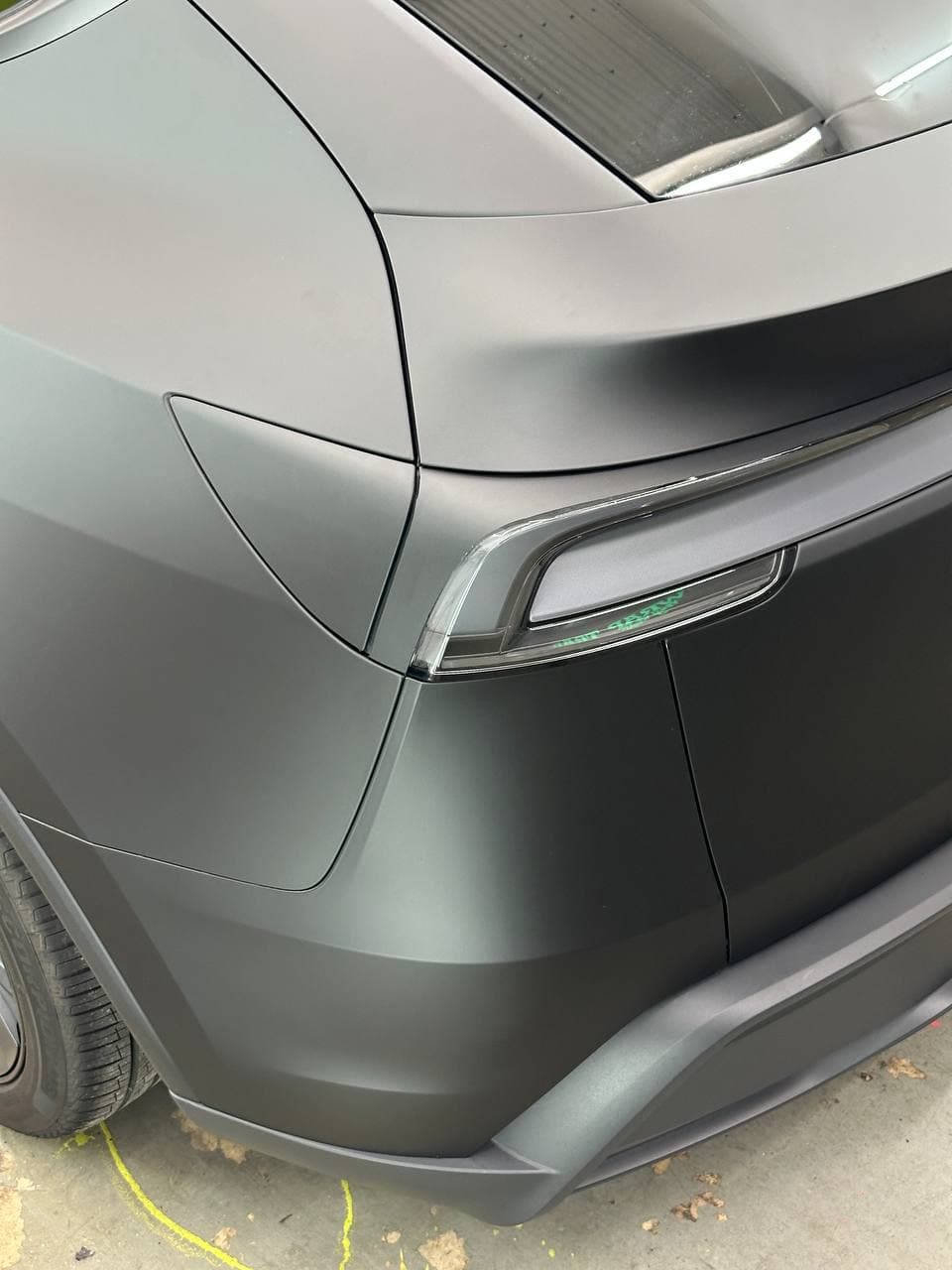
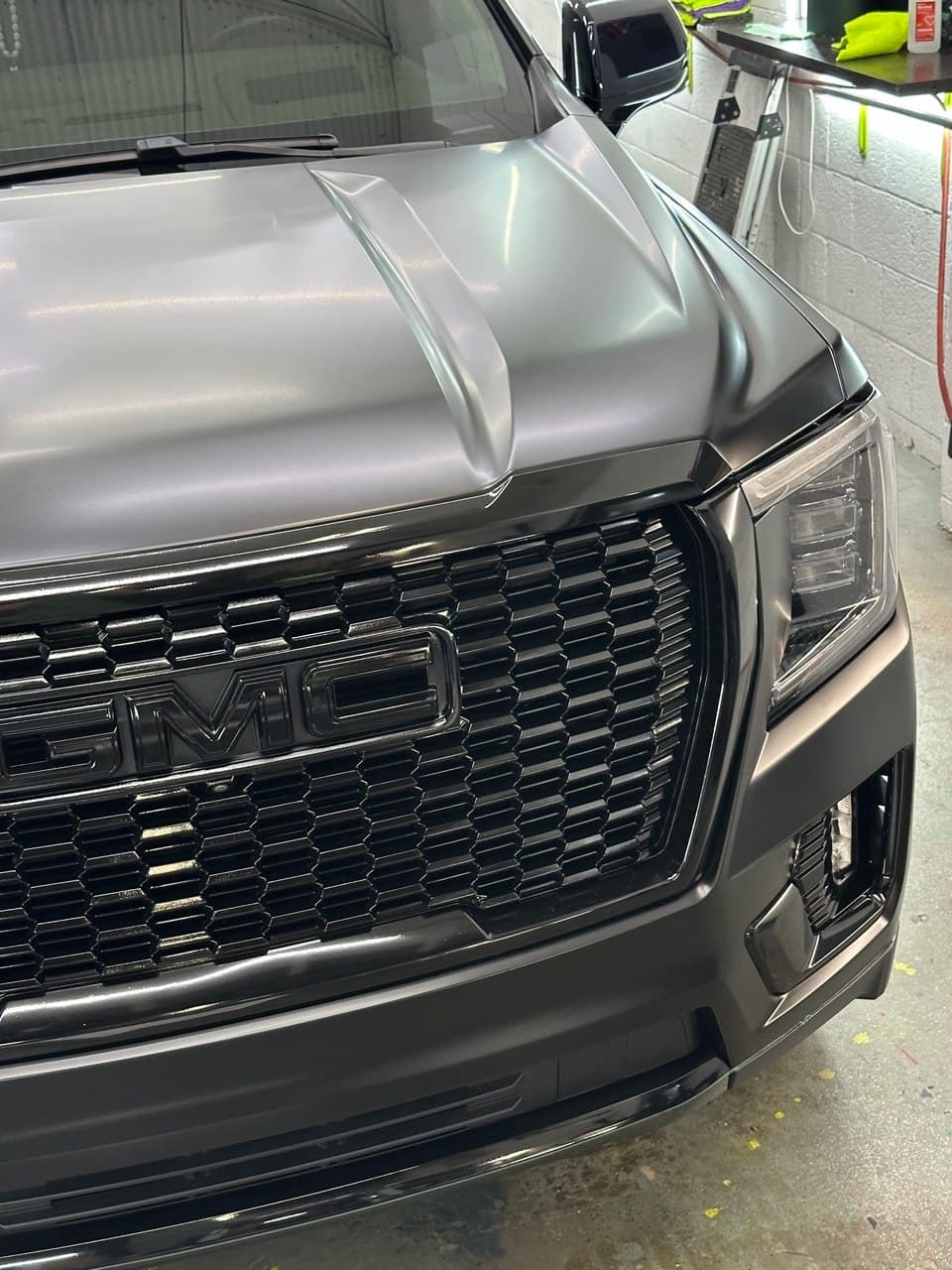
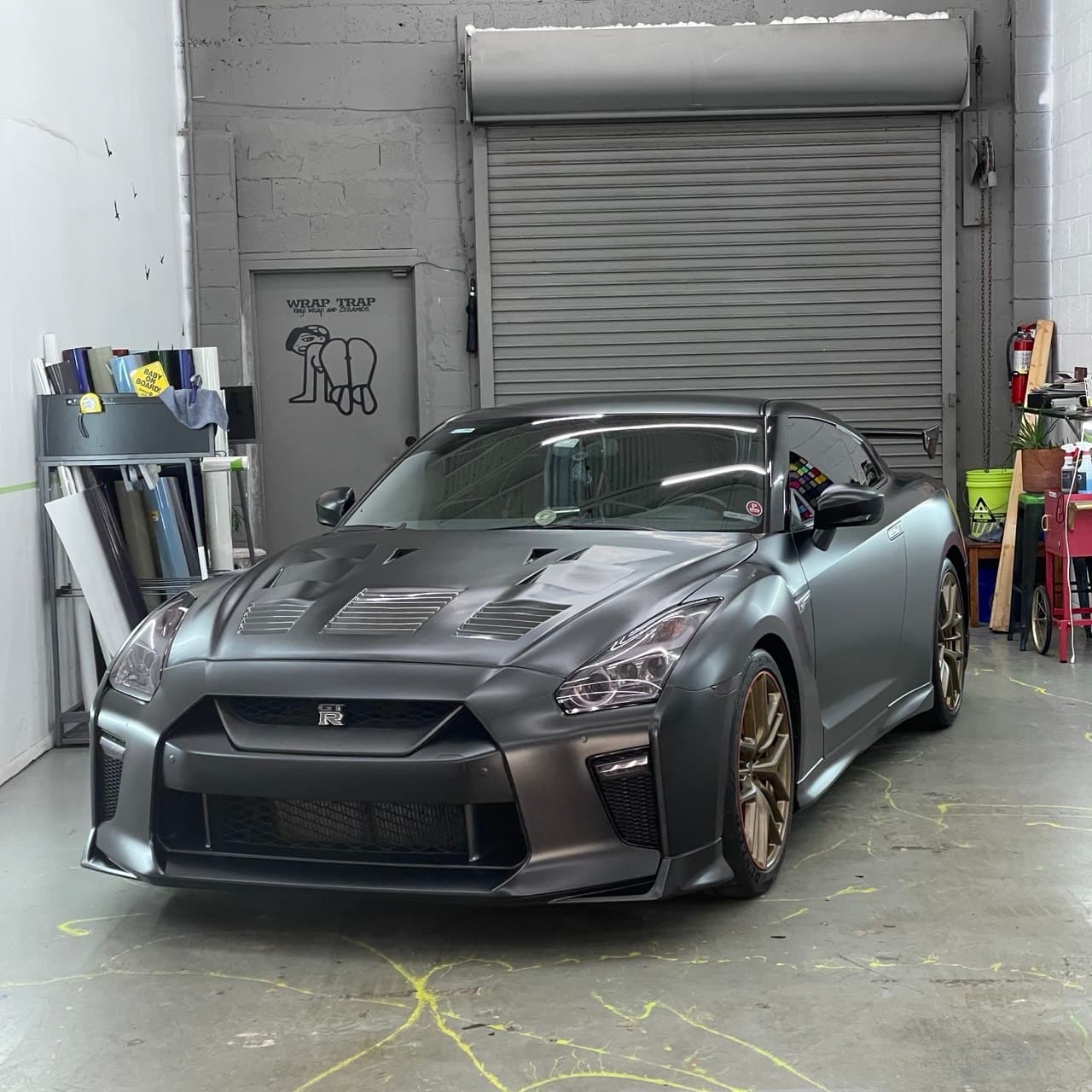
An honest note from our own gallery: satin black outnumbers true matte black in the vehicles we have photographed — a GMC Yukon, a Nissan GT-R, a Nismo 370Z and a Cadillac Escalade all went satin, while the flattest black in the collection is a velour matte black in colored PPF. People who come in asking for matte often leave with satin once they have held both samples under the sun. Our matte vs gloss wrap page goes deeper on the trade-off.
What a Matte Black Wrap Costs in 2026
Matte black is a stocked, standard-finish film, so it does not sit at the top of the range the way color-shift and chrome films do. Where your car lands inside the ladder is set by three things.
Vehicle size is the biggest lever — a full-size SUV uses far more film and far more hours than a coupe.
The film itself is the second. The brand and grade of matte black we choose for your car moves the price, and the difference between a premium cast matte and a bargain calendared one is the difference between a wrap that still looks flat at year five and one that is chalking and lifting at year two.
Paint condition is the third. Matte transmits every flaw beneath it, so peeling clear coat or deep scratches have to be dealt with before the film goes on, and that shows up as a line on the quote.
There is also a second route to the look. Satin black in colored paint protection film runs $4,500 to $8,500, lasts seven to ten years, and puts an 8-mil self-healing urethane between the road and your paint. Our colored PPF library has 21 satin finishes and 2 true matte options alongside 39 gloss colors; the colored PPF page has all 62.
Installation: Why Matte Punishes Shortcuts
Every mistake an installer can make is louder on matte than on gloss. Over-stretch a matte film around a bumper corner and the pigment thins into a lighter, slightly shiny patch that never goes away. Lay a seam in the wrong place and the flat surface draws a line around it. Leave an edge cut at the panel line instead of tucked behind it and the first hot week curls it. On a gloss wrap the reflections camouflage some of this; on matte there is nowhere for a flaw to hide.
That is why our process for matte black is slower than the same car in gloss. The vehicle is washed, clay-barred and decontaminated so nothing sits between the paint and the adhesive. Emblems, trim and where practical door handles come off so the film runs underneath instead of stopping short. Panels are formed with controlled heat and relaxed before trimming so the film is not under tension at the edges. The finished car is inspected under lights before you see it, and the workmanship warranty that comes with it is written down.
We also keep a record of the exact film used on your car. If a door gets dinged next year, we can replace one panel and match it rather than redoing the side.
The Care Rules for Matte Black
This section is the reason the post exists. A matte wrap that is cared for properly looks the same at year five as it did on delivery day; one that is treated like gloss paint looks tired in a season.
Never do these
The wash routine that works
Bird droppings, sap and bugs
Acidic contaminants etch a flat finish faster than a gloss one because there is no clear layer above the pigment. Lay a wet microfiber over the spot for a minute to soften it, lift it without scrubbing, then rinse. Dried-on tar or sap can be softened with a matte-safe cleaner; never pick at it with a nail or a plastic card.
The swirl question
The swirls people see on matte black are usually not scratches at all. They are oils, sunscreen, wash residue or product streaks sitting on the surface, and a matte-specific detailer removes them. Genuine scratches through the film cannot be polished out; the fix is replacing the panel, which is another reason the film record matters.
Ceramic on Matte: The Rule Most Shops Skip
A ceramic coating is the single best thing you can put on a matte wrap, and it is also the easiest way to ruin one. The wrong product adds shine. The right one seals the film without changing the sheen, and it turns every rule in the care section from a chore into a rinse: water beads and runs off, bird droppings lift instead of etching, and the UV that fades flat pigment first has to get through the coating.
We are a certified System X installer, and System X makes a matte version of its coating for exactly this use. Every full matte or satin vinyl wrap we install leaves with that matte-specific top coat at no charge. If your matte wrap was installed somewhere else, bring it in; standalone coating packages start at $749 and we will quote the matte formula for your car. The full explanation of what a coating does for film is on our ceramic coating for wraps page.
Florida Sun, Heat and Salt Air
South Florida is a stress test for any black wrap. Black absorbs more solar energy than a light color, so panel surface temperatures climb higher in August and the edges and seams cycle through more expansion and contraction than they would in a milder climate; that is where poor edge work fails first. UV works on flat pigment with no clear layer above it, so a bargain matte chalks and greys inside a couple of years while a premium cast matte with UV inhibitors holds its depth. Salt air near the coast slowly works on adhesive.
Expect five to seven years from a premium matte black wrap here with the coating and the wash routine above. A garaged car lands at the top of that range; a car that lives outside near the water lands lower. Without the coating and with gloss-paint habits, fading and edge wear show up years earlier.
Mistakes We See on Matte Black
Ready to Go Matte Black?
Matte black is still the wrap that changes a car most for the money, and with the right film, careful installation and a matte-specific ceramic it is a finish you can live with every day. Start on the vinyl wrap service page, compare finishes on the matte vs gloss page, or consider satin black in colored PPF if you want protection built in. Then request a free quote or call (305) 244-8908 — we are at 1810 N Dixie Hwy, Hollywood, FL 33020, open Monday through Saturday from 11am to 7pm, and the samples are waiting on the counter.
Frequently Asked Questions
Ready to Get Started?
Get a free quote from Wrap Trap — South Florida's premier wrap shop.