
The Yacht That Baked in Fort Lauderdale: Gelcoat vs. Wrap Refinishing, a True Story
The Yacht That Baked in Fort Lauderdale
Here's a job we still talk about in the shop.
A three-story yacht from a prestigious European builder, sitting in Fort Lauderdale — parked, of all places, right in front of the manufacturer's own office. Never sold. Never crossed an ocean under an owner's flag. It just sat there, the way inventory does.
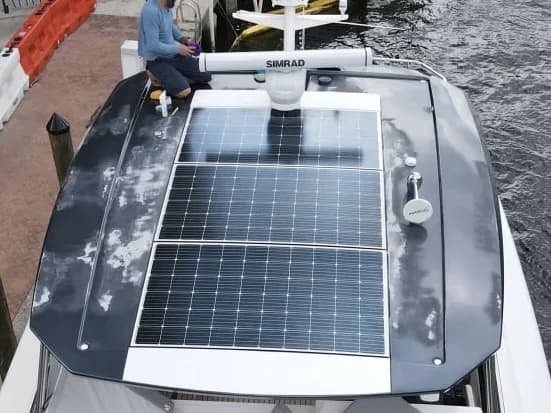
Its top deck was a huge one — roughly 30 by 20 feet — carrying an array of solar panels. And in less than a year and a half of South Florida sun, the factory gelcoat on that rooftop was destroyed. Chalked, cracked, cooked — with the worst of it concentrated around the solar panels, where heat and reflection work a surface the hardest.
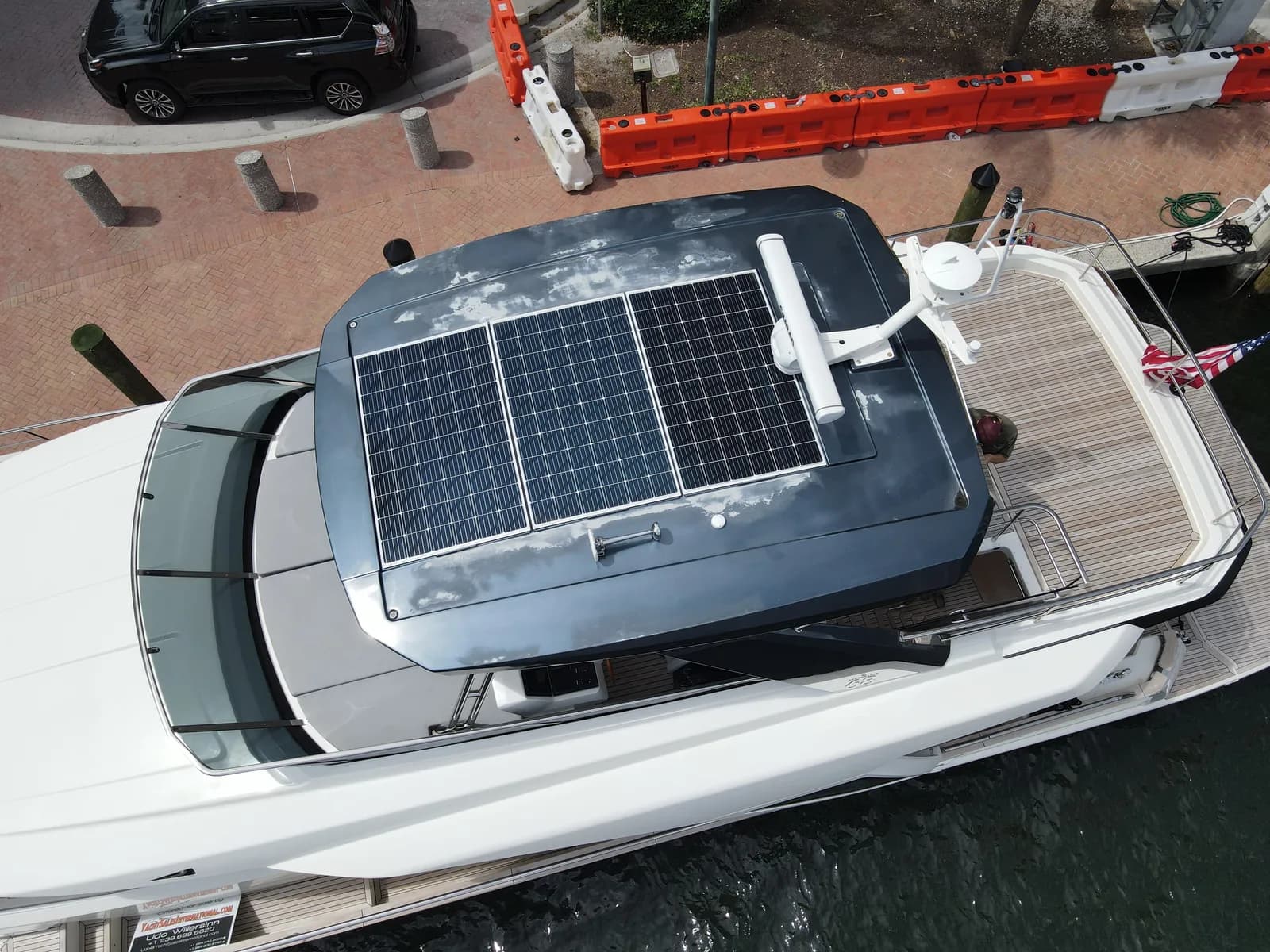
Read that timeline again. This wasn't a neglected thirty-year-old hull. This was factory gelcoat, applied in factory conditions by one of the best builders in the world — and Florida took it apart before the boat ever had an owner.
We got the call to refinish the roof. But before we tell you how that went, let's talk about the part that stings the most.
Part One: All of It Was Preventable
Gelcoat's enemy isn't water — it's UV. Florida serves more of it, more days a year, at higher intensity than almost anywhere a European builder tests against. Unprotected gelcoat oxidizes: it chalks, loses gloss, gets brittle, and eventually cracks. On a horizontal surface like a flybridge roof — the one part of the boat the sun hits square-on all day — the process runs fastest of all.
Two things would have stopped it, both costing a small fraction of what the failure ultimately cost:
Marine ceramic coating. A hard, UV-shielding barrier bonded over the gelcoat. It doesn't just add gloss — it takes the oxidation abuse so the gelcoat doesn't, and it makes salt, grime, and waterline scum dramatically easier to wash off. On a new boat, ceramic protection is the cheapest insurance the sun will ever sell you.
Marine PPF. For the surfaces that take physical abuse as well as sun — rub zones, high-traffic decks, transom steps — paint protection film adds a thick urethane layer with self-healing top coats. Florida heat, the very thing that kills gelcoat, is what activates the self-healing.
The best marine protection strategy combines the two: ceramic over the broad surfaces, film on the impact zones. Applied when the boat is new, it's a rounding error against the vessel's value. Skipped, it's a five-figure lesson — as this builder learned in front of their own office windows.
Part Two: Two Roads to Refinish a Dead Roof
Once gelcoat is gone, you have two honest options — and they are not close.
The boatyard road
Refinishing gelcoat or marine paint to factory spec is not a dockside job. The yacht travels to a yard equipped to spray and cure — which for a vessel this size means transport, haul-out or covered work space, and storage for as long as the job takes. The work itself is brutally labor-intensive: sanding the dead surface off, fairing, spraying, curing, wet-sanding, buffing. The bill stacks in layers — yard time, storage while paint cures, skilled labor by the hour, transport both ways.
And here's the part almost nobody says out loud: the original coating — applied in factory conditions — already failed in this exact spot, in under two years. A respray done locally, in non-factory conditions, doesn't get better odds than the factory got. It gets worse ones. You can pay the biggest bill on the menu and still be holding a coin flip on the same failure, on the same timeline, in the same sun.
The wrap road
The alternative is the one we were hired for: refinishing with marine-grade film.
A skilled crew comes to the boat — no transport, no yard storage, no cure schedule. The prep is the job: sanding the failed surface, leveling and fairing until it's ready to carry film for years, decontaminating every inch. Then marine-rated vinyl or colored PPF goes down — films engineered specifically to live in UV and salt air.
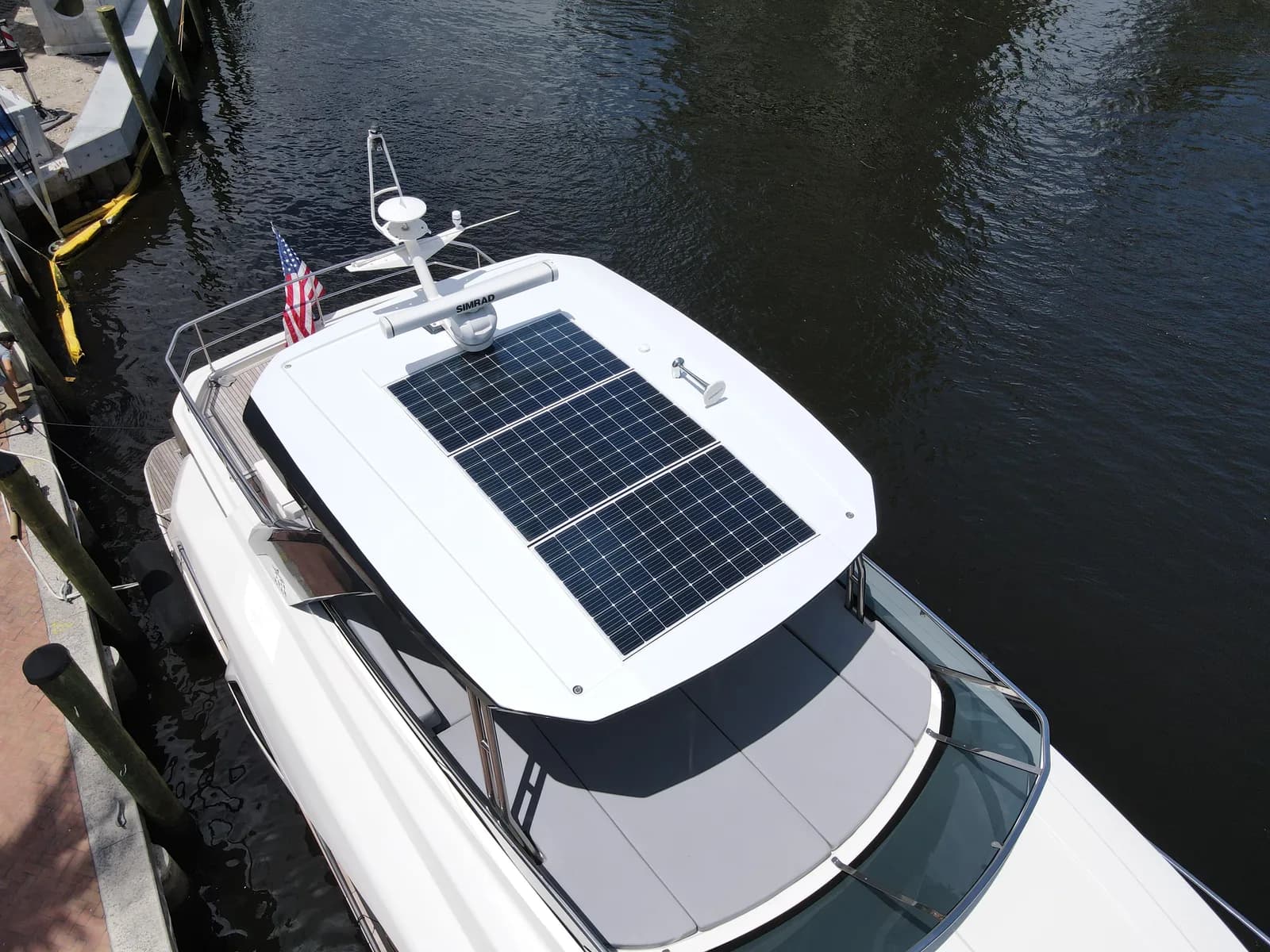
The economics land firmly on film's side — industry pricing puts professional re-gelcoat work at multiples of a comparable wrap even before transport and storage enter the bill. But the economics aren't even the headline. The headline is this:
A marine-rated film carries a 5–7 year expected lifespan in the exact position where factory gelcoat from a prestigious builder lasted less than two.
That's not a knock on the builder. It's physics: film is engineered for UV as its primary job; gelcoat treats UV as an afterthought. When the environment already beat the factory once, you don't re-run the factory's play from a weaker position — you change the material.
Below Deck: The Refinish Nobody Thinks About
Yacht refinishing doesn't stop at the roofline, and this is where film does something paint never could.
Yacht interiors take harsh use — salt on hands, sunscreen, spilled drinks, cleaning chemicals strong enough to deal with all of it. Textured architectural films — convincing wood grains, stone, leather, brushed metal — re-skin cabin joinery, galley faces, bulkheads, and head compartments without tearing out a single panel. These films are built for commercial duty: they withstand hard daily use and hold up to aggressive cleaners that would destroy varnish or veneer. (Our interior wrapping guide covers the material class in depth.)
The point isn't just that the cabin looks new. It's that you stop babying it. A refinished, chemical-proof interior isn't an upgrade in looks — it's an upgrade in confidence, and in how much pleasure the boat gives you every time you use it hard.
The Honest Limits
Film is refinishing, not repair — and we'll always say so:
Quick Answers for Boat Owners
The Moral, Plainly
Protect gelcoat while it's alive — ceramic and film cost a fraction of what failure does. And when it's already gone, think hard before paying yard prices to re-run the exact method that just failed. There's a reason that yacht's roof wears film now.
See how we approach marine work — including the honest wrap-vs-paint-vs-gelcoat math — on our marine wraps page.
Get a free quote: Contact us or call — we answer during business hours.
Wrap Trap** | 1810 N Dixie Hwy, Hollywood, FL 33020 | **(305) 244-8908
Ready to Get Started?
Get a free quote from Wrap Trap — South Florida's premier wrap shop.