
Chrome Delete Cost in 2026: $350–$900, Priced by What Is on Your Car
Chrome Delete Cost in 2026: $350–$900, Priced by What Is on Your Car
At Wrap Trap in Hollywood, FL, a chrome delete runs $350–$900 and is done in a day. Most cars fall in the middle of that range. A pre-refresh Tesla Model 3 or Model Y sits at the low end, typically $350–$600. A German sedan with a full chrome package sits at the top. Get a chrome delete quote or call (305) 244-8908 with your year and model and we will give you a number over the phone.
The rest of this page explains where your car falls in that range, and why. The short answer is that the price tracks the length of the parts list, not the size of the vehicle.
Updated September 2026. We have brought this guide up to current pricing, replaced the stock photos with blacked-out trim from our own bay, added a Tesla-versus-German-trim comparison because it is the question we get most, and added a proper FAQ covering warranty, durability, and finish choice.
What Is a Chrome Delete?
A chrome delete covers the bright factory trim on your vehicle with cast vinyl film in a finish you choose. Window surrounds, beltline moldings, door handle inserts, mirror caps, grille bars, badge surrounds, roof rails, exhaust tips. Nothing is removed permanently and nothing is painted. The chrome stays under the film, protected from the sun and the salt air, and if you ever want it back, the film comes off.
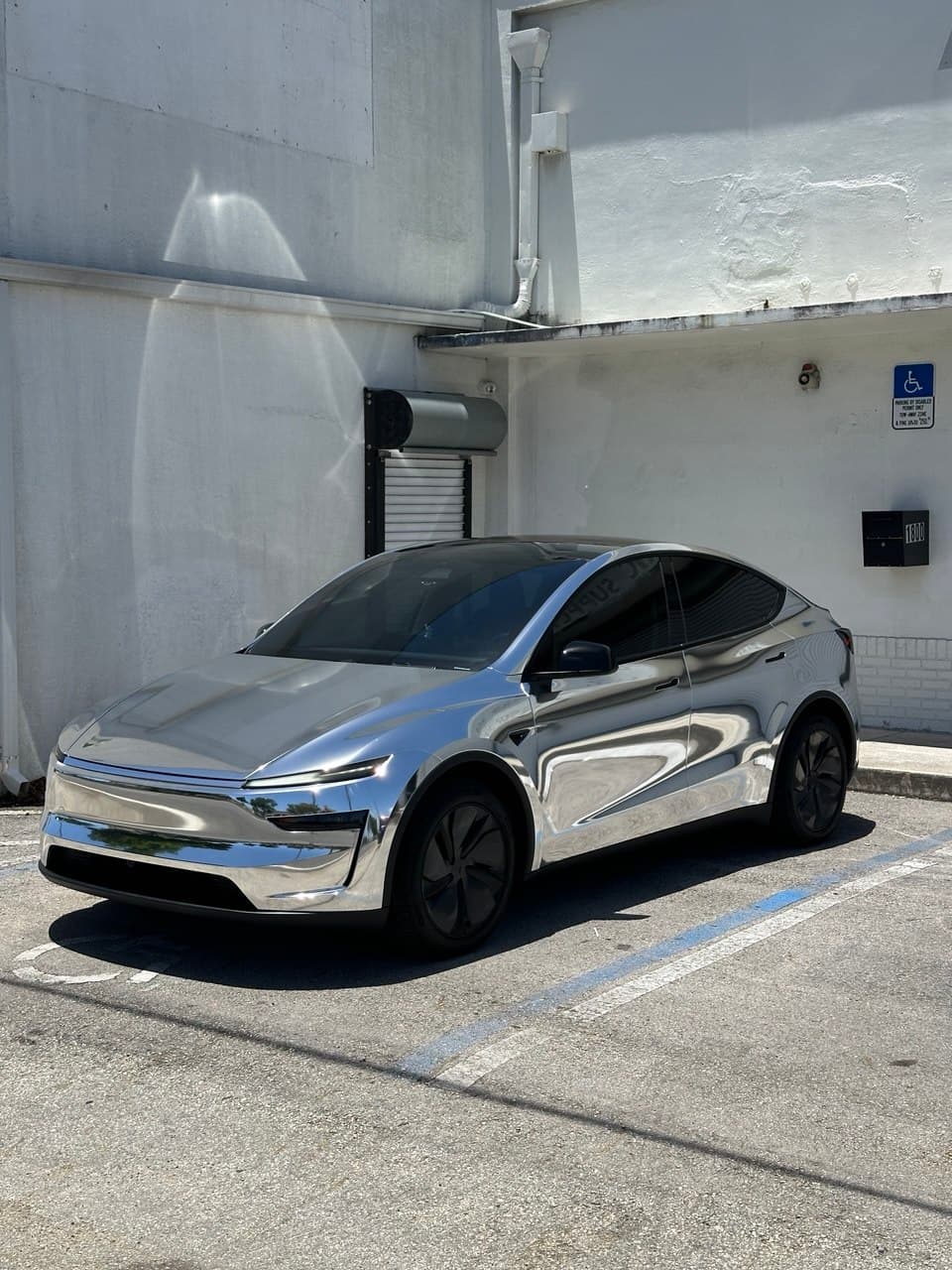
Gloss black is the default because it is what the factory blackout packages use and what Tesla adopted when it dropped chrome from its lineup. Satin black is the enthusiast pick. Beyond black, we regularly do body-color matches, gunmetal, and contrast accents.
2026 Chrome Delete Pricing by Vehicle Type
These bands cover a full delete, meaning every piece of exterior chrome. Partial deletes (windows only, handles only) come in below them.
Compact cars (Civic, Corolla, Golf): $350–$450
Sedans and coupes (3 Series, Model 3, C-Class): $350–$550
Luxury sedans (5 Series, S-Class, Model S): $450–$700
Compact SUVs (CR-V, RAV4, Tiguan, Model Y): $400–$550
Mid-size SUVs (X5, Range Rover Sport, Model X): $500–$800
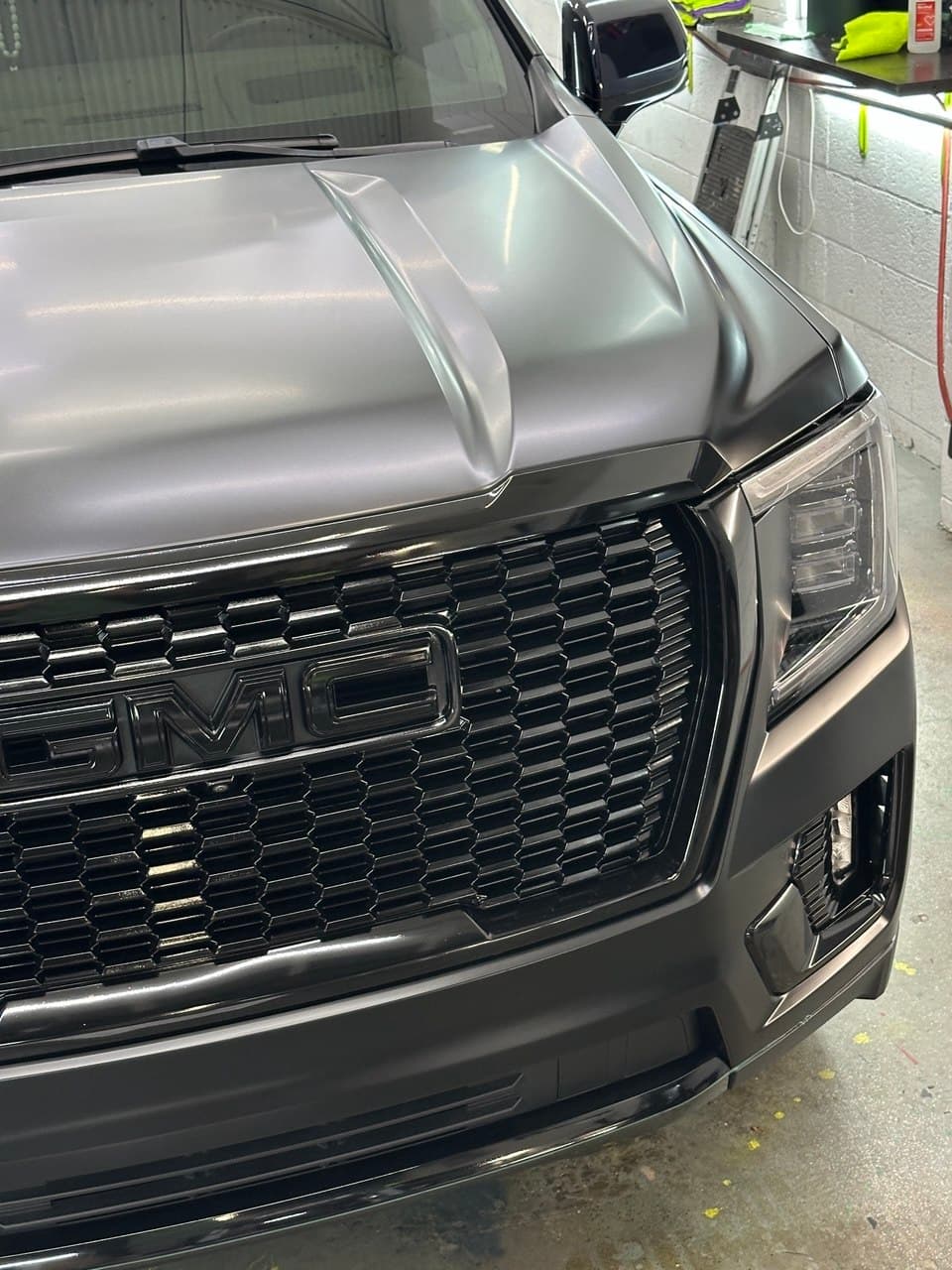
Full-size SUVs (Suburban, Navigator, Escalade): $550–$900
Pickup trucks (F-150, Ram 1500, Silverado): $450–$800
Two cars in the same row can still price differently. A base-trim compact with black plastic trim from the factory might only need mirror caps and a grille bar. The same model in a chrome appearance package can have more bright trim than a full-size SUV. We look at the actual car, count the pieces, and quote from that.
What Affects Chrome Delete Pricing?
Amount of Chrome
This is most of the price. Each piece of trim is decontaminated, measured, cut, applied, edge-wrapped, and post-heated individually. Ten pieces is a morning; thirty pieces is a full day. A Tesla built before the 2021 refresh has a short, well-known list. A 2017 E-Class with the chrome package has a long one.
Trim Accessibility
Some trim gets wrapped in place. Some gets pulled off the car so the film can be folded around the back edge instead of cut flush at the visible edge, which is the difference between a delete that looks wrapped and one that looks factory. Mirror caps, handles, and certain beltline moldings often come off. That takes time and adds to the quote, and it is time worth paying for.
Finish Choice
Gloss black and satin black are baseline. Specialty finishes such as brushed metal, carbon-fiber texture, or a color-matched accent may add $50–$100 to the job because the film costs more and, for a color match, we may be sourcing a specific catalog color for a small amount of material.
Vehicle Condition
Pitted, oxidized, or previously wrapped trim needs extra prep. Old adhesive has to come off completely before new film goes on, and that is billable time. Bright anodized aluminum trim, which is what a lot of "chrome" window surrounds actually are, can corrode in our salt air into a chalky texture that telegraphs through film. We will tell you if a piece needs polishing or replacing first rather than wrap over it and hand you a bumpy stripe.
Tesla Chrome vs. German Chrome: Why the Same Job Costs Different Money
We get asked why a Tesla chrome delete is $350–$600 while a BMW or Mercedes is often $400–$700 for what sounds like the same thing. It is not the same thing.
Tesla Model 3 and Model Y (pre-refresh). Window surrounds, door handle trim, the small camera-housing surrounds behind the front wheels, and the badges. That is essentially the whole list, and it is nearly identical car to car, so we know the material yield and the hours before it arrives. It is why the Model 3 is the most common chrome delete we do.
BMW, Mercedes, and Audi with chrome packages. Window surrounds plus separate B- and C-pillar finishers, beltline strips, grille bars and surrounds, lower bumper trim, mirror bases, badge surrounds, and often exhaust tips and roof rails. On our chrome delete page we list BMW 3/5/X Series at $400–$600, Mercedes C/E/GLE at $450–$700, and Audi A4/Q5/Q7 at $400–$650. The number moves with the length of that list.
Set against the factory alternative, either one is cheap. The premium brands sell black trim as an order-time option that often runs into four figures, cannot be added after the car is built, and is permanent. We covered that whole story in Why Tesla Deleted Every Piece of Chrome.
Gloss Black vs. Satin Black: Which One?
Gloss black matches what the manufacturers use. BMW, Mercedes, and Audi blackout packages are almost all high gloss, and Tesla went gloss on the 2021 refresh. If your goal is a car that looks like it was ordered this way, gloss is the answer more often than people expect. The trade-off is that gloss shows dust, water spots, and fingerprints, especially on handles.
Satin black is quieter. It hides spotting far better in daily use, it pairs naturally with matte or satin paint and wraps, and it reads as deliberate rather than factory. Most of our enthusiast customers pick satin. On a car with satin paint, gloss trim looks mismatched, so satin is the right call there.
Matte black is the most aggressive and the least factory-looking, which is exactly why some owners want it.
We will lay real samples on your actual trim in daylight before we cut anything. Phone screens are not to be trusted on black.
What Is Included at Wrap Trap
A chrome delete here is a full process, not a sticker job:
Most chrome deletes are dropped off in the morning and picked up the same day. Vehicles with a very long trim list, or trim that must come off the car, can run into a second day. We confirm the timeline when we see the vehicle.
DIY vs. Professional Chrome Delete
Chrome delete kits exist, and we are not going to pretend they do not. Here is the honest comparison from a shop that regularly strips failed DIY attempts.
DIY
The material for a kit costs a small fraction of a professional job. The problem is not the film; it is the geometry. Window surrounds are long, narrow, and under tension for their whole length. Door handles and mirror caps are compound curves. Without proper heat, a squeegee technique, and a post-heat step, film on those surfaces stores tension and lets go somewhere between month three and month eight. Most DIY deletes look obviously DIY within a year, and the adhesive residue they leave behind is more work to remove than a fresh install.
Professional
You drop the car off and pick it up done, with film that lasts 3–5 years in South Florida sun and edges that do not show a silver hairline. If a DIY attempt fails and you bring it to us afterward, you pay for the removal and prep on top of the delete, so the attempt did not save anything.
Can a Chrome Delete Be Removed?
Yes. The film comes off cleanly with heat, the chrome underneath has spent the whole time protected from UV and salt, and the car goes back to stock. That makes chrome delete a natural fit for:
How Long Does a Chrome Delete Last?
With premium cast film and a proper post-heat, expect 3–5 years in South Florida. What shortens that:
Hand washing with a pH-neutral soap and keeping the pressure washer away from edges is most of the maintenance. If you want the trim to shed water and dirt the way the rest of the car does, a System X ceramic package ($749 / $1,199 / $2,399 for the vehicle, depending on tier) can be added while the car is already in the bay. See our ceramic coating page for what each tier covers.
Which Vehicles Look Best with Chrome Delete?
Almost every modern car improves, but the change is most dramatic on:
Tesla Model 3 and Model S built before the 2021 refresh. Tesla itself decided these cars look better without chrome, then built them that way. A delete brings an older car up to the current factory look.
BMW 3, 5, and X models. Chrome window trim and kidney grille surrounds go black and the car reads a full generation newer.
Mercedes C, E, and GLE. The chrome on these cars is prominent and polarizing. Blacked out, the front end looks like the AMG-spec cars.
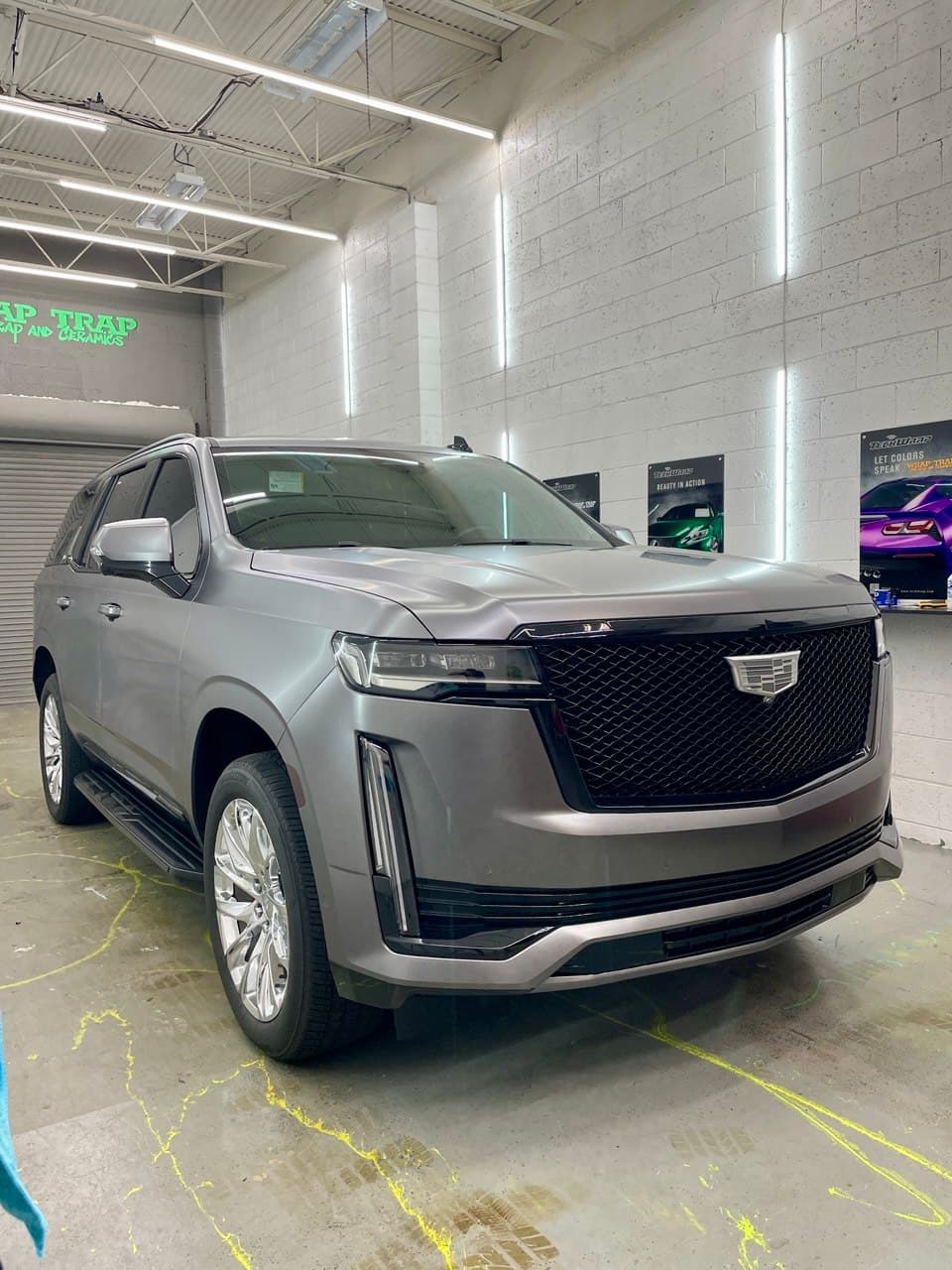
Full-size trucks. The chrome grille surround on an F-150, Silverado, or Ram is enormous, and blacking it out changes the entire character of the truck.
Range Rover and Land Rover. Prominent bright trim on a boxy body. Black trim takes it from stately to menacing.
There are cars that genuinely look better with their chrome, mostly classics and full-size luxury sedans where the brightwork is part of the original design. We will tell you if yours is one of them.
Book Your Chrome Delete
Chrome delete is the mod that makes people ask what you did to your car, for $350–$900, in a day, fully reversible. If you are in Hollywood, Fort Lauderdale, Miami, or anywhere in Broward or Miami-Dade, bring the car by and we will walk it with you and count the pieces.
Chrome delete pricing and finishes | Why Tesla deleted its chrome | Chrome delete basics | Request a quote
Find us at 1810 N Dixie Hwy, Hollywood, FL 33020, or call (305) 244-8908.
Frequently Asked Questions
Ready to Get Started?
Get a free quote from Wrap Trap — South Florida's premier wrap shop.